
5 Things To Know About Thyroid Eye Disease

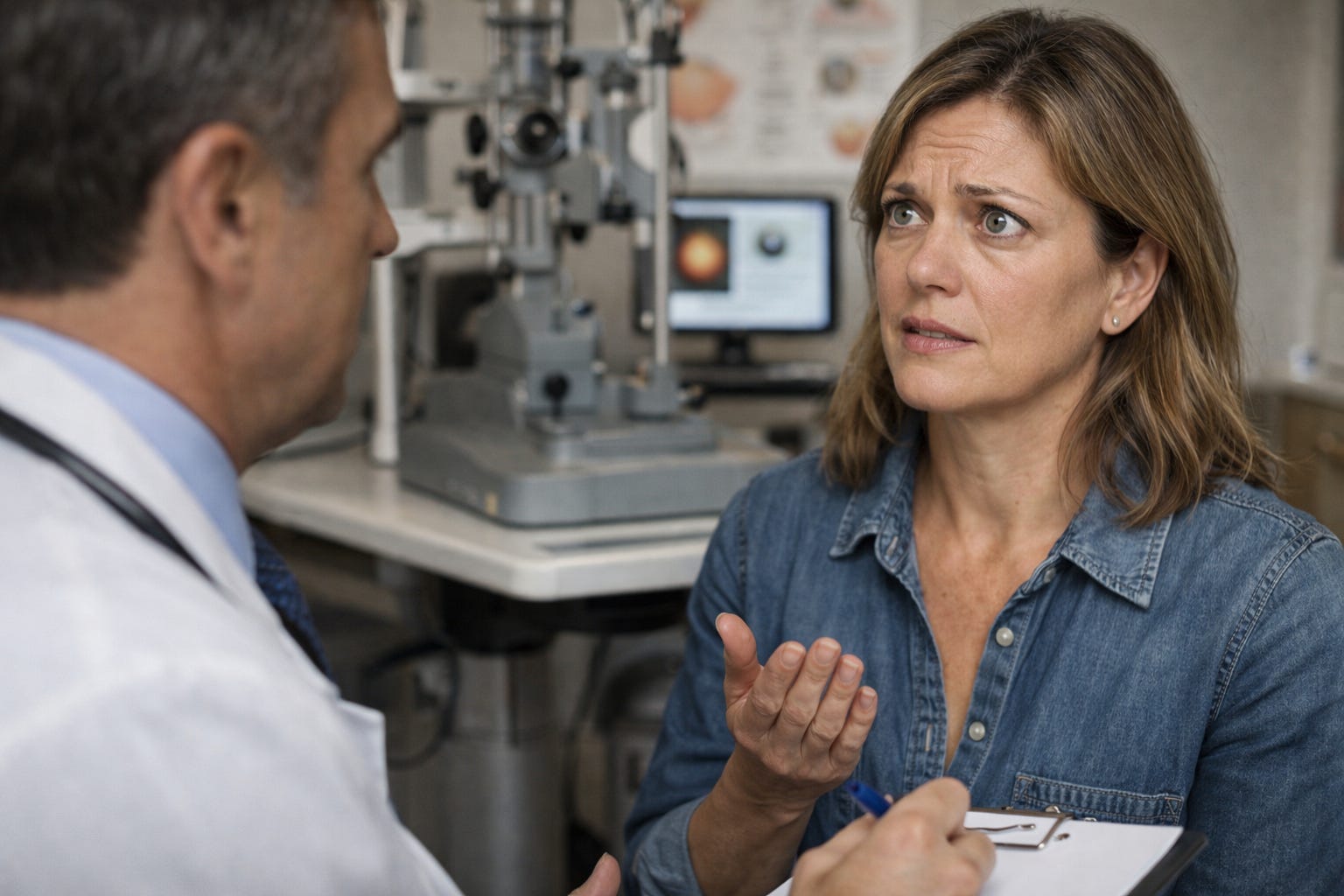
When I dealt with Graves’ disease, I did not experience any overt eye symptoms. So if I had thyroid eye disease (TED), it was very mild and not noticeable. But over the years, I have worked with many Graves’ patients who had obvious signs and symptoms of thyroid eye disease.
Research shows that the prevalence of thyroid eye disease is approximately 50% among patients with Graves’ disease (1). Thankfully, most cases of TED are mild. However, when you’ve worked with as many people with Graves’ disease as I have, it’s not surprising to see a fair number of moderate to severe cases as well.
So what I’d like to do is discuss five things anyone with thyroid eye disease should know. While this information will especially be beneficial to those who are interested in taking a natural treatment approach, even if this doesn’t describe you I think you’ll find this article to be beneficial.
If you know someone who might find this article helpful, please forward it to them. And if you’re not already signed up for my free newsletter, you can do that here:
1. Like Graves’ disease, thyroid eye disease is an immune system condition.
In thyroid eye disease (TED), the immune system attacks the tissues around the eyes. This leads to symptoms such as swelling, eye bulging (proptosis), dryness, irritation, and sometimes double vision.
So in order to address TED naturally, you need to find and remove the immune system triggers—just as you would with Graves’ disease. I discussed this in a previous article.
And since most of the immune system cells are in the gut you also want to do everything you can to improve your gut microbiome. I discussed this in greater detail in my article “The Graves-Gut Connection”.
This isn’t meant to suggest that there isn’t a time and place for steroids, surgery, or even Tepezza. But just as is the case with Graves’ disease, most endocrinologists and ophthalmologists don’t focus on improving the health of the immune system in their patients with TED. They primarily manage symptoms rather than addressing underlying triggers.
2. It’s more challenging to address moderate to severe thyroid eye disease naturally.
While I’ve helped many people with TED over the years, if someone has moderate to severe bulging and/or double vision, it can be more difficult to fully resolve this through a natural approach alone.
This doesn’t mean you shouldn’t work on finding and removing triggers, healing your gut, and supporting the immune system with nutrients such as selenium (more on this below). But it does mean you need to have realistic expectations.
If someone has significant proptosis or persistent double vision, a natural approach won’t always completely reverse these changes—especially if fibrosis (scar tissue) has already developed.
I’m not a big fan of Tepezza, but I’ve had a few patients receive infusions prior to working with me because their TED was severely affecting their quality of life. I’ve also had a few patients choose Tepezza after working with me because their TED was progressing more quickly than expected.
I mention this not to discourage anyone from addressing the root cause. In fact, I strongly believe in doing so. But sometimes a combination approach—supporting the immune system while also considering conventional options—makes sense depending on the severity and progression.
One more thing about Tepezza…recently someone who received all eight infusions and received amazing results while at the same time taking a natural approach relapsed after getting a virus. While over the years I’ve seen people with Graves’ disease relapse (which I’ll discuss in a future article), this is the first time I’ve seen someone receive the Tepezza and then have their TED flare up.
3. Radioactive iodine can worsen thyroid eye disease.
Research shows that treatment with radioactive iodine (RAI) can exacerbate approximately 24% of TED cases (2). This is one of the main reasons I do not recommend RAI.
But how about if someone doesn’t have TED? The problem is that I’ve known people who did not appear to have TED prior to receiving RAI, only to develop noticeable eye symptoms afterward. In many cases, they likely had a very mild or subclinical case that flared following treatment.
On my podcast I had this conversation with Dr. Rani Banik, who is a Board-certified Ophthalmologist. She mentioned how giving someone with suspected or known TED corticosteroids (i.e. Prednisone) while receiving RAI will prevent a flare-up of the eyes.
This very well might reduce the risk, but it doesn’t completely eliminate it. Plus, while there is a time and place for Prednisone, there are side effects associated with this as well.
4. Certain natural agents may help with TED
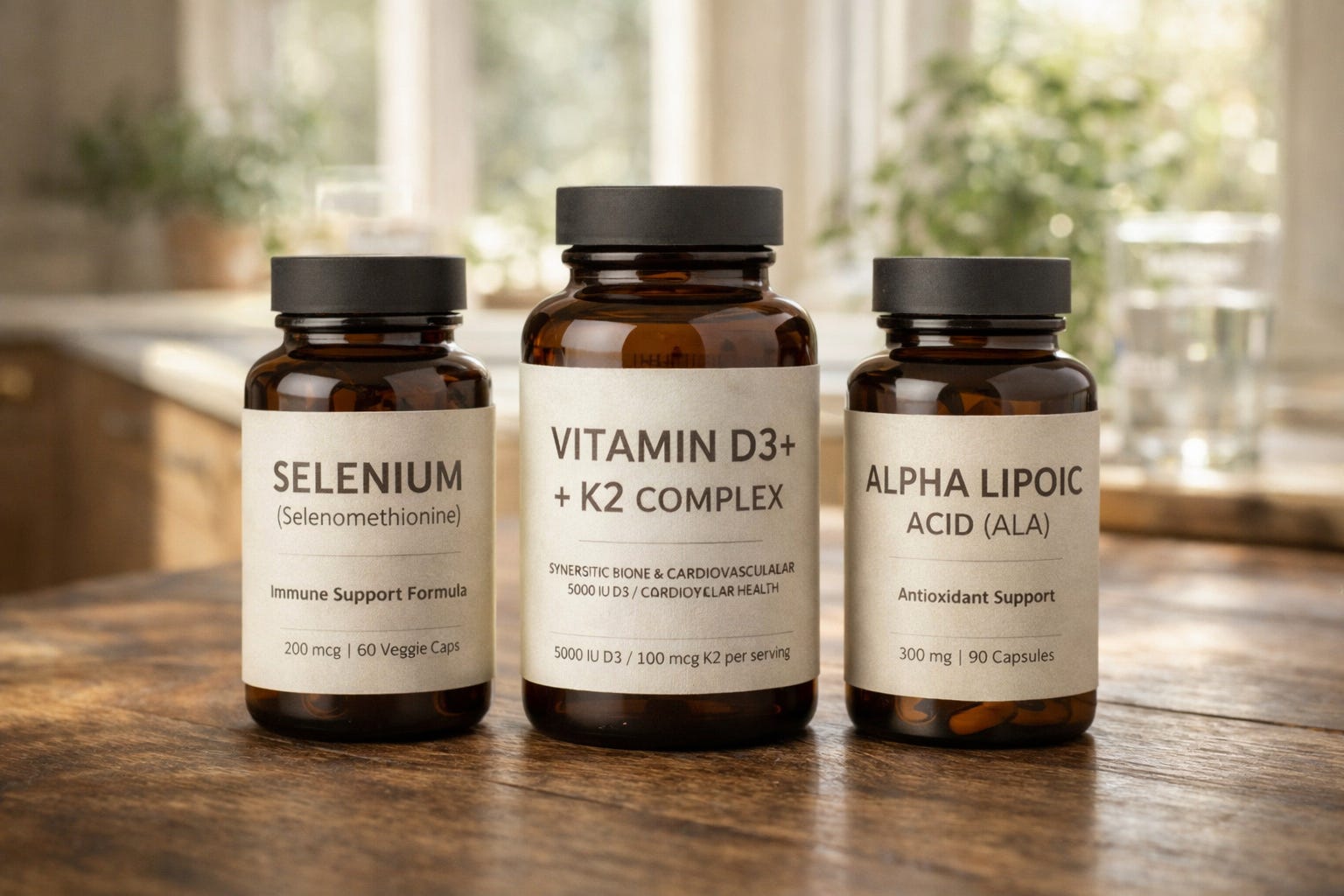
Let’s take a look at some of the natural agents that I have seen help people with TED:
Selenium is probably the most well-known natural agent for thyroid eye disease. I usually recommend a minimum of 200 mcg daily in the form of selenomethionine, and sometimes up to 400 mcg in moderate to severe cases (under supervision).
Vitamin D is also important, as it plays a key role in immune modulation. I like to see vitamin D levels at least 50 ng/mL, and some practitioners recommend levels between 60 and 80 ng/mL for those with autoimmune conditions.
Alpha lipoic acid (ALA) may help as well. ALA supports antioxidant activity and can reduce oxidative stress, which plays a role in TED (3).
Berberine has also shown promise in research. One study demonstrated that berberine may help regulate adipogenesis, inflammation, hyaluronic acid production, and fibrosis associated with TED (4).
In TED, the eye muscles enlarge largely due to excessive hyaluronic acid accumulation. Over time, this can lead to fibrosis (scar tissue formation). Berberine may help inhibit these processes.
I do want to mention that I have a product called SMT-BerbALA, which contains both alpha lipoic acid and berberine, and it’s included in my Thyroid Eye Disease Bundle.
5. Low-dose naltrexone (LDN) may be worth considering before Tepezza.
I’ve had a few patients take Tepezza and see good results, particularly with eye bulging. However, one of my male patients temporarily lost his hearing—a known potential side effect—along with tinnitus. Because of risks like this, it can be difficult for some people to weigh the risks versus benefits.
Low-dose naltrexone (LDN) works by modulating the immune system, and side effects are typically minimal—especially compared to Tepezza. It’s also far less expensive.
The downside is that LDN can be somewhat “hit or miss.” It’s generally not as effective as Tepezza when it comes to reducing eye bulging, and neither option is particularly effective for double vision.
Another consideration is that if you’re trying to reverse the autoimmune component of Graves’ disease naturally, adding LDN can make it harder to determine how much of your progress is related to the natural protocol you’re following.
The goal here isn’t to go into great detail about LDN, but I’d be open to writing a future article if there’s enough interest (just let me know in the comments below). You can also listen to my podcast episode on LDN by clicking here.
Final Thoughts
Thyroid eye disease is an immune-mediated condition, just like Graves’ disease. While mild cases often improve with proper immune support and trigger removal, moderate to severe cases can be more complex and may require a broader treatment strategy.
No matter the severity, I always recommend addressing the underlying immune imbalance. Even if someone ultimately chooses conventional treatment, improving gut health, optimizing nutrients, reducing inflammation, and identifying triggers will always put you in a stronger position long term.
If you’re dealing with TED, don’t ignore it—but also don’t assume that symptom management is your only option.
Have you been struggling with thyroid eye disease? If so please let me know in the comments below what you have done so far to address it.
Thank you for subscribing to Healing Graves’ Naturally! If you know anyone who has hyperthyroidism who is looking to save their thyroid, please share this with them right away.
Ready to Heal Your Hyperthyroidism?
If you have Graves’ disease or a different type of hyperthyroidism and are looking to save your thyroid and regain your health, here are some other resources you might find helpful:
1. Save My Thyroid Podcast. While most of the guest interviews can benefit those with hyperthyroidism AND Hashimoto’s, there are many solo episodes that focus on hyperthyroidism. Most of the podcasts are uploaded to my YouTube channel.
—> https://savemythyroid.com/podcast-2/
—> http://www.savemythyroid.com/YouTube
2. Hyperthyroid Books. I have three thyroid-related books, two of them which focus on hyperthyroidism. Natural Treatment Solutions for Hyperthyroidism and Graves’ disease is in it’s third edition, and my latest book is The Hyperthyroid Healing Diet.
—> https://savemythyroid.com/book/
3. Healing Graves’ Naturally Skool Community. When you join you get access to my Graves’ Survival Roadmap Training, and there is also a free monthly Hyperthyroid Healing Diet Q & A call with one of my nutritional health coaches.
—> https://www.savemythyroid.com/healgravesdisease
4. Hyperthyroid Healing Strategy Call. This is for those who are ready to dedicate time, energy, and finances to work with me one-on-one in my Hyperthyroid Health Restoration and Optimal Health program. I’ve been working with hyperthyroid patients since 2009, and personally dealt with Graves’ disease and restored my own health.
—> http://www.savemythyroid.com/strategycall
References
(1) https://www.ncbi.nlm.nih.gov/books/NBK582134/
(2) https://pubmed.ncbi.nlm.nih.gov/9420337/
(3) https://pmc.ncbi.nlm.nih.gov/articles/PMC4718288/
(4) https://iovs.arvojournals.org/article.aspx?articleid=2783636
I did do a podcast episode with Dr. Osansky that described my functional and conventional decisions and outcomes with TED. After three years of double vision, I had strabismus surgery in February, and it corrected my vision. I feel at peace because I know I attempted non-invasive options. I am so happy to stop wearing my prism glasses and return to my previous vision. The surgery was simple and recovery was easy for me. I know my natural health approach over decades has helped me have minimal side effects with all the conventional drugs I have taken, from Methimazole to Tepezza to surgery (general anesthesia and antibiotic eye drops).
I've had great success with Euphrasia eye drops and taking the homeopathic remedy Euphrasia 30C under my tongue. Everyone once in awhile I get a flare and then I use the drops again and take the ready and pain is gone and vision improves. Just my experience!