
Hyperthyroidism and the Iodine Controversy

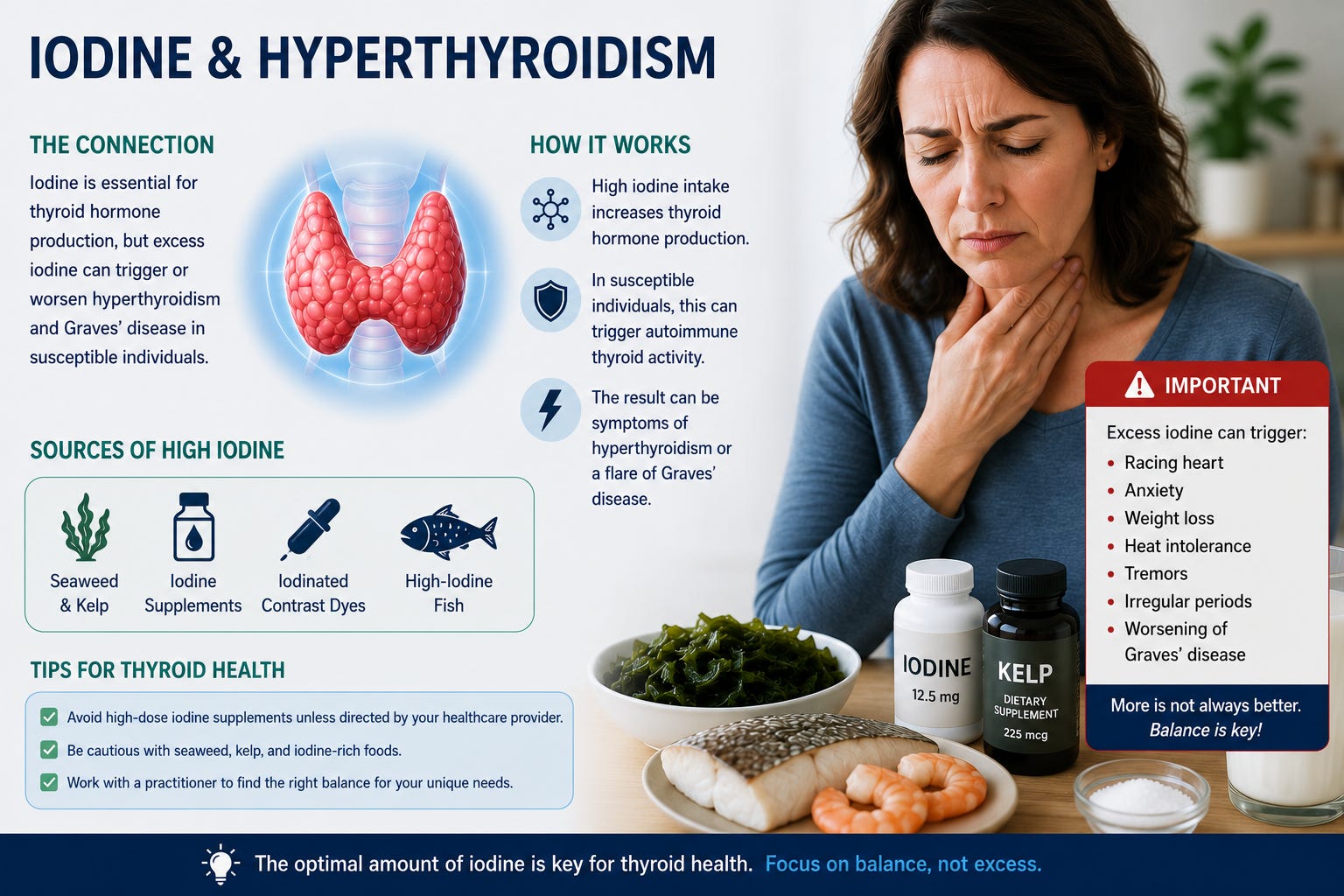
Recently I wrote an article on “Selenium and Graves’ Disease”, and while just about every natural healthcare practitioner agrees that selenium can be beneficial for those with those with a thyroid condition, the same isn’t true with iodine.
In fact, there are so many different opinions involving iodine and thyroid health. Some practitioners recommend iodine supplementation for all or most of their thyroid patients, while others tell every thyroid patient to avoid supplemental iodine completely and even minimize food sources of iodine.
While we all have our opinions and personal biases, if you’ve been following me for awhile you know that I try to keep an open mind. And it’s no different with iodine.
Around the time I was diagnosed with Graves’ disease in 2008, supplementing with higher doses of iodine was very common, and it was even being taught at some of the health conferences I attended prior to my diagnosis.
As a result, when I was diagnosed with hyperthyroidism and eventually Graves’ disease, I supplemented with higher doses of iodine. I first did a 24-hour urinary iodine loading test, and when it confirmed a deficiency I took iodine as part of my overall approach to restoring my health.
But over the years I learned that in some cases iodine can exacerbate hyperthyroidism, along with the autoimmune component of Graves’ disease. And if anyone reading this has Hashimoto’s, iodine can sometimes exacerbate the autoimmune component in those with that condition as well.
If you know someone who might find this article helpful, please forward it to them. And if you’re not already signed up for my free newsletter, you can do that here:
What Are the Benefits of Iodine Supplementation?
Although I’m cautious about iodine supplementation, I also want you to understand some of the potential benefits of this mineral.
1. Iodine Is Important for the Production of Thyroid Hormone
Because of this, most endocrinologists recommend that people with hyperthyroidism and Graves’ disease avoid iodine.
And while it might make sense to avoid iodine when you’re hyperthyroid in order to avoid producing more thyroid hormone, in many cases supplementing with iodine won’t automatically cause excessive thyroid hormone production. In fact, before radioactive iodine became popular, iodine was commonly used as part of the conventional treatment approach for hyperthyroidism.
That said, it certainly is possible that supplementing with iodine while hyperthyroid can further increase thyroid hormone levels. And because of this, I can’t say that I recommend iodine as a form of hyperthyroid symptom management.
2. Iodine Helps With the Detoxification of Halides
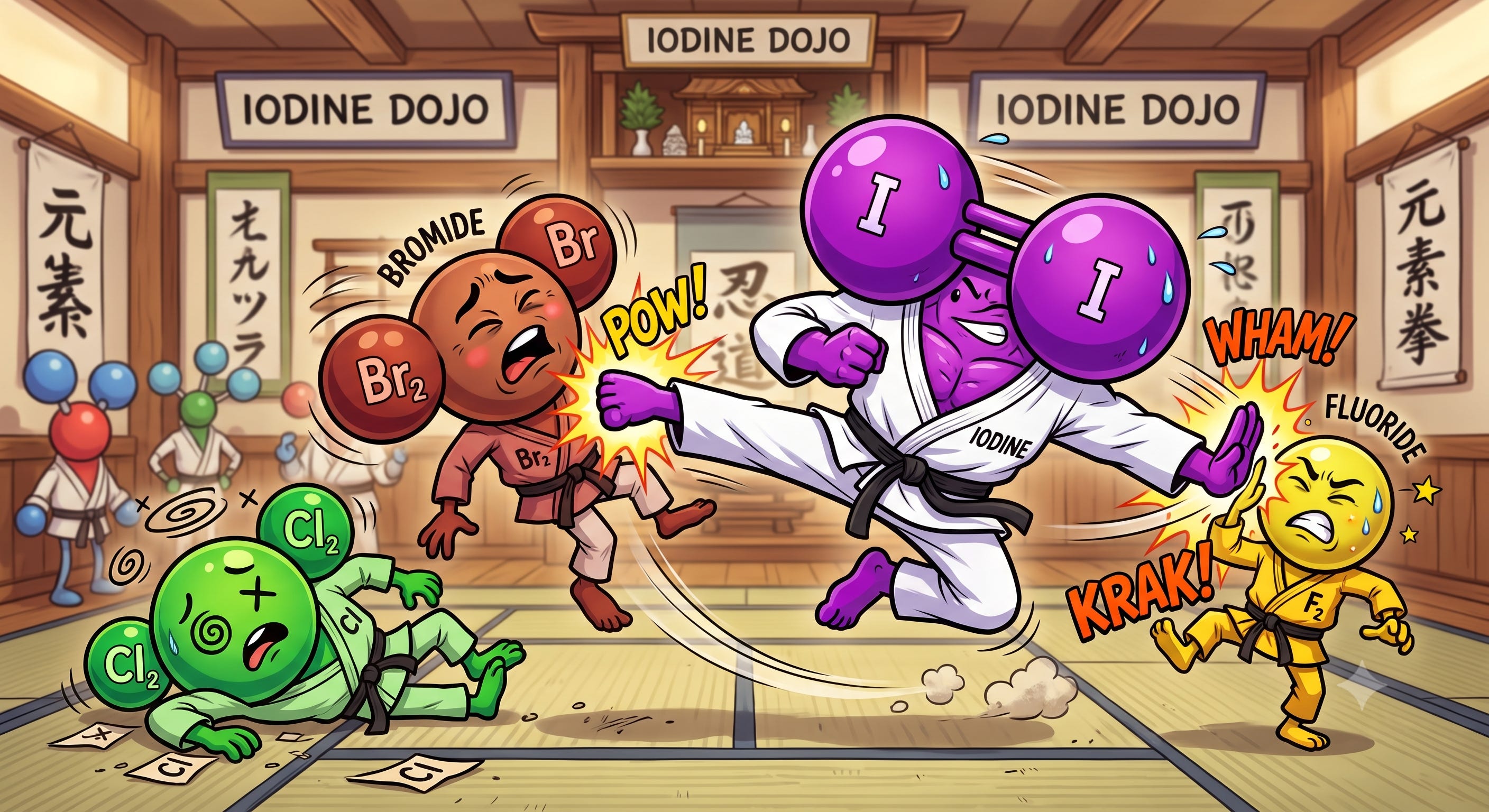
Bromide, fluoride, and chloride have chemical structures similar to iodine and compete for many of the same receptor sites. As a result, exposure to larger amounts of fluoride, bromide, or chloride may contribute to an iodine deficiency. On the other hand, iodine supplementation can help displace these other halides from tissues.
This can be beneficial because excessive accumulation of these halides may have negative effects on your health.
3. Iodine Has Antimicrobial Properties
Many people know that iodine makes an excellent antiseptic.
Iodine is bactericidal, fungicidal, tuberculocidal, virucidal, and sporicidal (1). Its antimicrobial action is rapid, even at low concentrations, because iodine quickly penetrates microorganisms and attacks key proteins, nucleotides, and fatty acids, ultimately leading to cell death.
4. Iodine Plays a Role in Regulating Estrogen Metabolism
Iodine appears to influence estrogen metabolism, which may help explain why populations that consume larger amounts of iodine tend to have lower rates of certain hormone-related cancers, including breast and prostate cancer (2,3).
5. Iodine Can Help Prevent Damage From Radiation Exposure
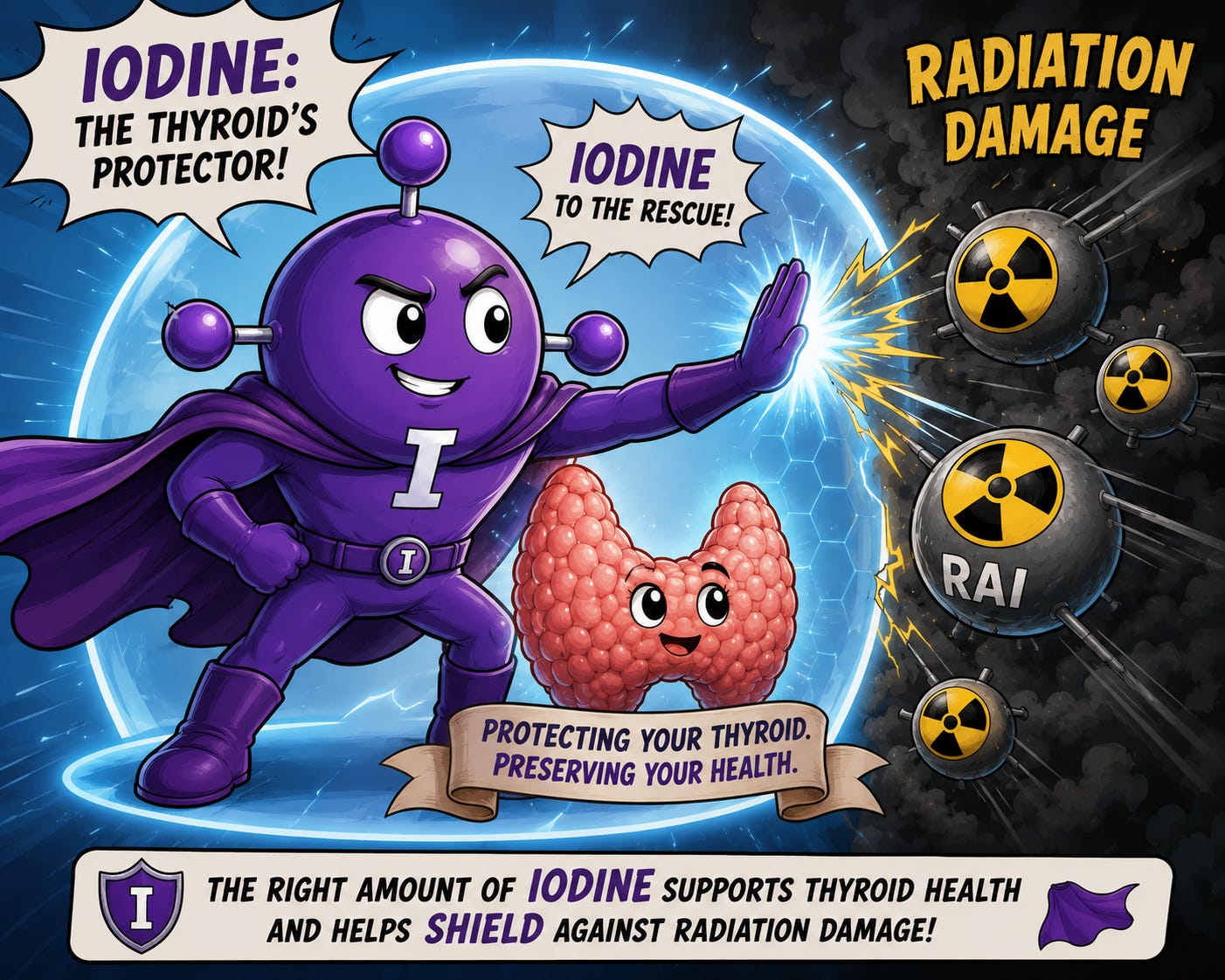
Iodine supplementation can help protect the thyroid gland from radioactive iodine exposure by saturating the thyroid with stable iodine before exposure occurs.
This is why potassium iodide tablets are sometimes distributed during nuclear emergencies. When the thyroid gland already has adequate iodine available, it is less likely to absorb radioactive iodine from the environment.
Of course, this doesn’t mean people should take large amounts of iodine on a regular basis in hopes of preventing future radiation exposure. But it does demonstrate one of the unique and important roles iodine plays in thyroid health.
Can Iodine Help with Thyroid Nodules and Large Goiters?
In some cases, an iodine deficiency can cause the development of thyroid nodules, as well as goiters, which is an enlargement of the thyroid gland. But this doesn’t mean that all thyroid nodules and goiters are caused by an iodine deficiency.
In fact, in some cases iodine supplementation can worsen thyroid nodules. This is especially true when someone has a toxic thyroid nodule. And in some cases iodine can also worsen a goiter, and so you need to be careful.
What’s the Best Method of Checking Iodine Status?
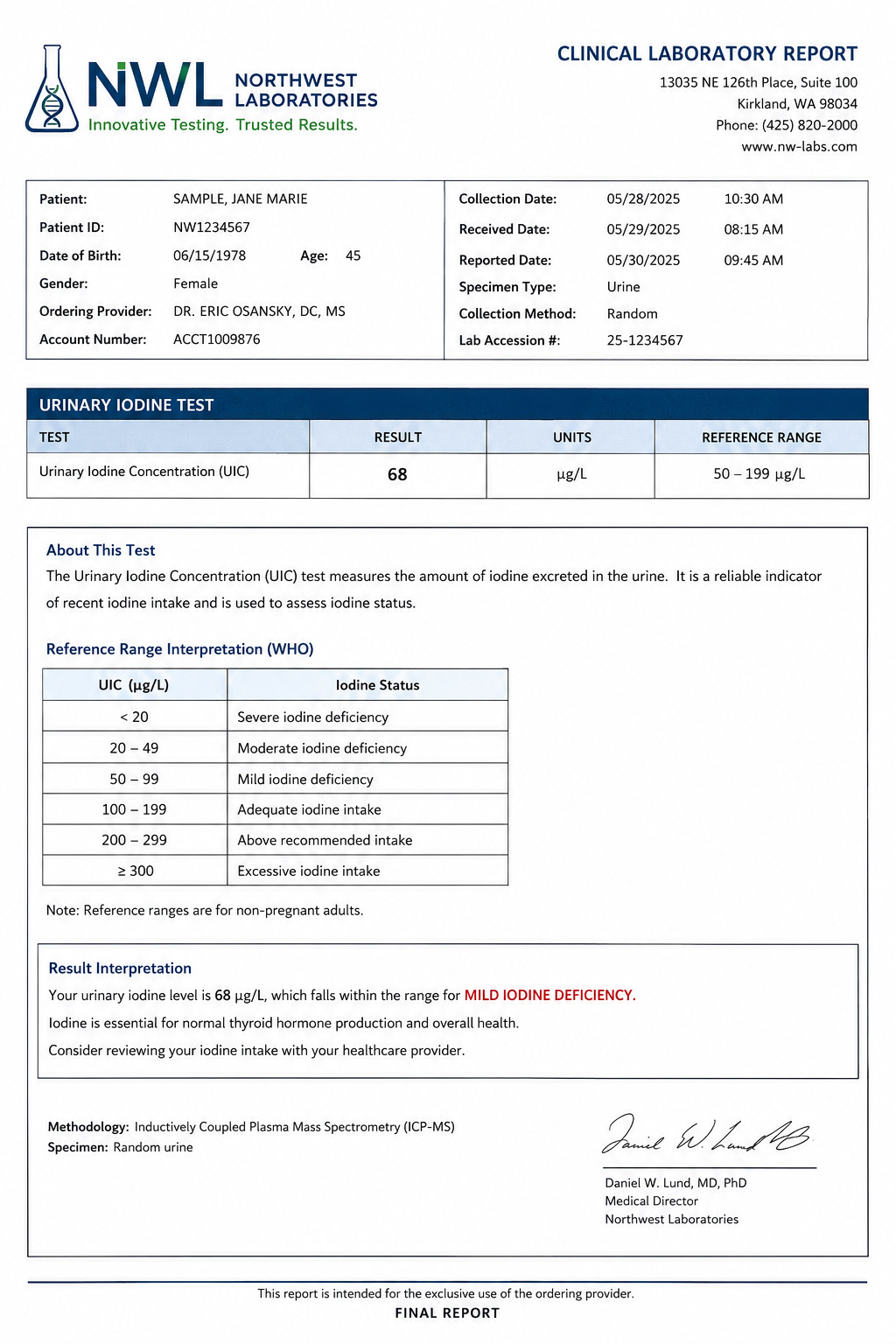
There is no perfect method of checking iodine levels, but urinary testing appears to be one of the better options. As I mentioned earlier, when I was dealing with Graves’ disease I used the iodine loading test, which involves taking a 50 mg tablet of iodine and potassium iodide and then measuring iodine excretion over a 24-hour period.
I have also recommended this test to patients in the past, although there can be risks associated with taking a large dose of iodine before collecting the urine samples. This doesn’t mean that I never recommend this test at times, but another option is an iodine spot urine test, which doesn’t require taking iodine beforehand.
Some labs also give the option of testing bromide levels. If doing a spot urine test, I think this can be valuable. The reason is that as I mentioned earlier, halides such as bromide compete with iodine. So while a normal iodine result doesn’t always rule out a deficiency, elevated bromide levels can provide additional evidence that someone may have a functional iodine deficiency, regardless of what the iodine result alone shows.
Dr. Angela Mazza’s Iodine Article
Dr. Angela Mazza is an integrative endocrinologist who has written numerous journal articles related to thyroid health, including one focused on iodine. Recently I had Dr. Mazza on the Save My Thyroid podcast to discuss iodine and thyroid health.
Like myself, Dr. Mazza is not anti-iodine. However, she is cautious about iodine supplementation in people with hyperthyroidism and Hashimoto’s, and she is also cautious about people with thyroid and autoimmune thyroid conditions consuming foods that are extremely high in iodine.
While I’m cautious, she’s probably a little more cautious than I am. For example, I generally have no problem with most of my patients taking a multivitamin containing iodine. During our interview, Dr. Mazza mentioned that in some cases she has patients take their multivitamin every other day because of the iodine content. Another difference is that while I don’t routinely test all of my patients for iodine, Dr. Mazza recommends urinary iodine testing for most of hers.
That said, we both agree that blood testing isn’t the best way to assess iodine status.
For more information, you can listen to the podcast by Clicking Here, and you can read Dr. Mazza’s journal article on iodine by Clicking Here.
Final Thoughts
Iodine is one of the most controversial topics in thyroid health. Some practitioners recommend it liberally, while others avoid it almost entirely. My opinion falls somewhere in the middle.
I absolutely recognize that iodine is an essential mineral and that it plays important roles beyond thyroid hormone production. At the same time, I’ve seen enough people with Graves’ disease and Hashimoto’s react poorly to iodine supplementation that I think caution is warranted.
This doesn’t mean everyone with hyperthyroidism should avoid iodine. Nor does it mean everyone should supplement with it. Like many things in functional medicine, the answer often depends on the individual.
Personally, I’m much more comfortable with people getting iodine through food and modest amounts in a quality multivitamin than taking large doses of iodine supplements without a clear reason.
At the end of the day, if you have Graves’ disease or Hashimoto’s, I think it’s wise to respect iodine. It can be beneficial in some situations, but it’s not a nutrient I would take casually just because someone on the internet says everyone is deficient. As with many aspects of thyroid health, a personalized approach is usually the best approach.
Thank you for subscribing to Healing Graves’ Naturally! If you know anyone who has hyperthyroidism who is looking to save their thyroid, please share this with them right away.
Are You Ready to Heal Your Hyperthyroidism?
If you have Graves’ disease or a different type of hyperthyroidism and are looking to save your thyroid and regain your health, here are some other resources you might find helpful:
1. Save My Thyroid Podcast. While most of the guest interviews can benefit those with hyperthyroidism AND Hashimoto’s, there are many solo episodes that focus on hyperthyroidism.
Most of the podcasts are uploaded to my YouTube channel.
—> https://savemythyroid.com/podcast-2/
—> http://www.savemythyroid.com/YouTube
2. Hyperthyroid Books. I have three thyroid-related books, two of them which focus on hyperthyroidism. Natural Treatment Solutions for Hyperthyroidism and Graves’ disease is in it’s third edition, and my latest book is The Hyperthyroid Healing Diet.
—> https://savemythyroid.com/book
3. Healing Graves’ Naturally Skool Community. When you join you get access to my Graves’ Survival Roadmap Training, and there is also a free monthly Hyperthyroid Healing Diet Q & A call with one of my nutritional health coaches.
—> https://www.savemythyroid.com/healgravesdisease
4. Hyperthyroid Healing Program. If you’re ready to heal your hyperthyroidism then you might be interested in my Hyperthyroid Health Restoration and Optimal Health program, where you will work with me one-on-one to heal your hyperthyroidism. For more information click on the links below.
—> http://www.workwithdreric.com
—> https://savemythyroid.com/hyperwebinar
References
(1) https://pmc.ncbi.nlm.nih.gov/articles/PMC88911/
(2) https://pmc.ncbi.nlm.nih.gov/articles/PMC2452979/
(3) https://pmc.ncbi.nlm.nih.gov/articles/PMC3752513/
I started taking iodine drops thinking that it would be beneficial. I am health conscious and exercise and eat healthy. I was not aware of what too much iodine would do and was taking too much. I started feeling very strange and couldn't really explain it. We were on vacation last June and I started feeling light headed my legs started swelling l was very short of breath and I told my wife that I had to go to the emergency room. Long story short and after blood tests I was told I have iodine poisoning which was the start of my hyperthyroidism. My levels were more than 2x normal.