
The Graves-Gut Connection

When I was diagnosed with Graves’ disease in 2008, I of course understood that it was an autoimmune condition, but back then I didn’t fully grasp the importance of the gut microbiome. And it shouldn’t be surprising that the endocrinologist I saw focused only on the thyroid gland, as most endocrinologists aren’t going to recommend anything to improve immune system health—let alone gut health.
In chiropractic school we learned about the gut, but we spent much more time focusing on the nervous system (which does play an important role in gut health). It’s not that we didn’t understand the connection between gut health and the immune system, but a lot more research has come out over the past couple of decades. As a result, most natural healthcare practitioners now recognize the vital role the gut microbiome plays in immune system health.
And while this article focuses on Graves’ disease, having a healthy gut is important for other types of hyperthyroidism as well. So regardless of the type of hyperthyroid condition you’re dealing with, you can never go wrong by doing things to improve your gut health.
If you know someone who might find this article helpful, please forward it to them. And if you’re not already signed up for my free newsletter, you can do that here:
6 Reasons Why Healing Your Gut Is Important to Reverse Graves’ Disease
There are several reasons why having a healthy gut is essential when it comes to reversing the autoimmune component of Graves’ disease, so let’s go ahead and cover each of them:
1. Most of the immune system is in the gut
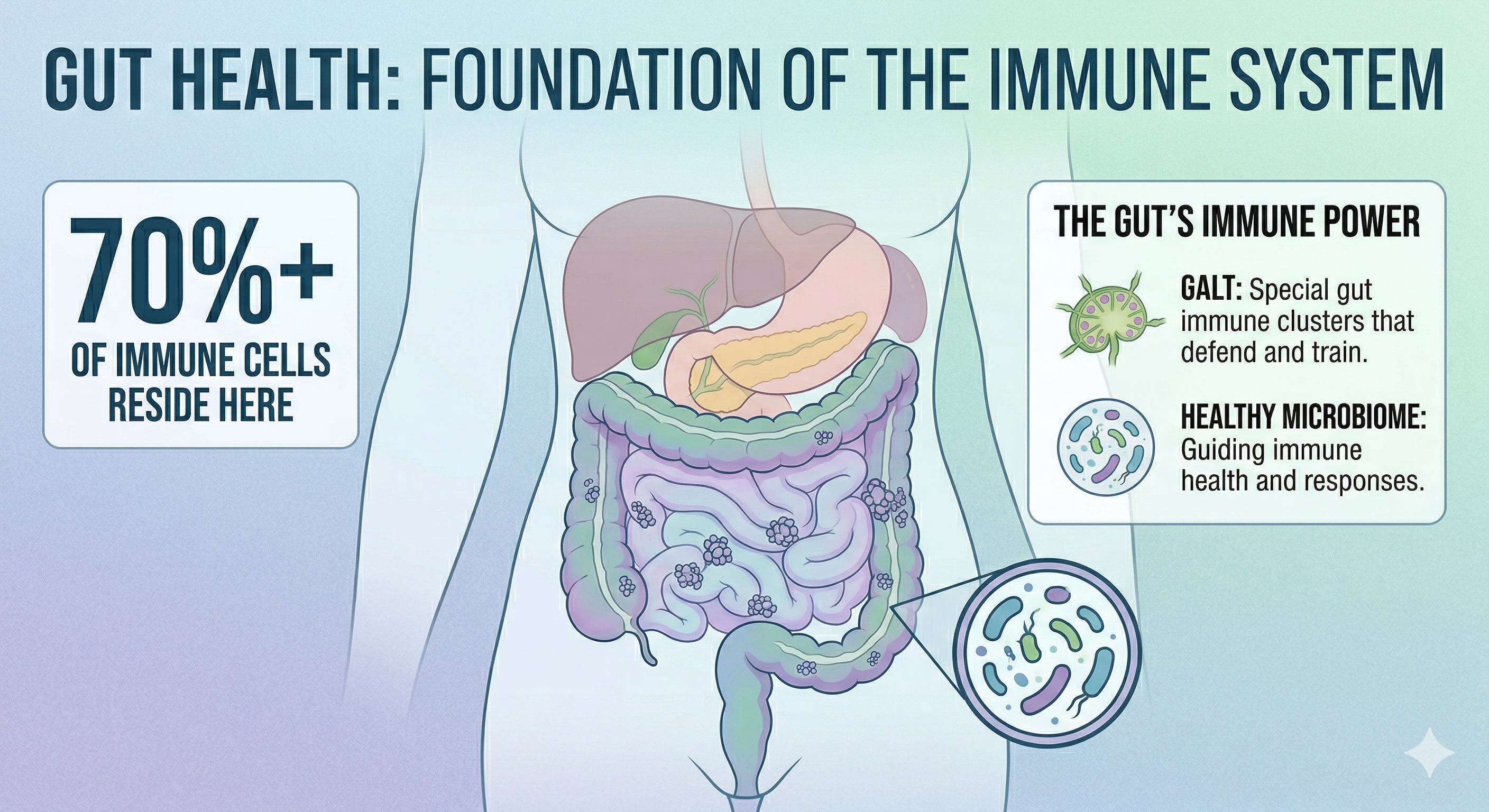
About 70–80% of immune cells reside in the gut-associated lymphoid tissue (GALT). As a result, if your gut microbiome is compromised, this can negatively affect immune system function.
2. The triad of autoimmunity
I’ve discussed this in previous newsletters. The triad of autoimmunity (also known as the 3-legged stool) includes:
1. a genetic predisposition
2. one or more environmental triggers
3. increased intestinal permeability (leaky gut)
So having a leaky gut is a factor in the development of autoimmune conditions, including Graves’ disease.
3. Nutrient digestion and absorption depend on gut health
Many nutrients are important for optimal immune function, including zinc, selenium, vitamins A, D, and E, and omega-3 fatty acids. If someone has digestive issues such as low stomach acid, insufficient digestive enzymes, or bile acid imbalances, this can interfere with the proper breakdown and absorption of these nutrients, ultimately impacting immune health.
4. Gut bacteria help regulate inflammation
Healthy gut bacteria produce short-chain fatty acids (SCFAs), including butyrate, which help reduce inflammation in the gut and support immune balance. A big part of maintaining adequate SCFA levels is consuming enough dietary fiber. In other words, if you’re not eating enough fiber, you’re likely not producing enough of these beneficial compounds.
5. Certain gut infections can trigger thyroid autoimmunity

While dietary changes and detox strategies are common starting points, infections and microbial imbalances can persist beneath the surface—often without obvious digestive symptoms.
Certain pathogens have been associated with autoimmune thyroid conditions, including bacteria such as H. pylori and Yersinia enterocolitica, parasites such as Blastocystis hominis, and even fungal overgrowth. These organisms can disrupt the gut lining, trigger immune activation, and in some cases contribute to molecular mimicry, where the immune system mistakenly attacks thyroid tissue.
This is why some people don’t fully recover by focusing only on diet and lifestyle, and instead need to dig deeper to identify and address underlying infections or dysbiosis.
6. Gut bacteria help control immune tolerance
Immune tolerance is the body’s ability to recognize what is safe and what is not—and to respond appropriately. When this system breaks down, the immune system can begin reacting to food proteins, chemicals, or even the body’s own tissues.
A loss of immune tolerance is a key factor in autoimmune conditions such as Graves’ disease. A diverse and balanced gut microbiome plays a major role in maintaining this tolerance and preventing inappropriate immune responses.
How to Optimize Gut Health
So what can you do to improve the health of your gut microbiome? There’s a lot you can do, but here are four things I personally focus on:
1. Eat a healthy diet
While I understand that the carnivore diet can benefit some people with autoimmune conditions, I don’t think it’s a good long-term approach. I personally eat plant-based foods daily to help nourish my gut microbiome.
If someone has a condition such as SIBO and can’t tolerate certain plant-based foods, then it may be necessary to temporarily limit those foods while addressing the underlying issue. But from a long-term wellness perspective, regularly consuming plant-based foods helps feed beneficial gut bacteria.
2. Minimize exposure to gut-disrupting chemicals
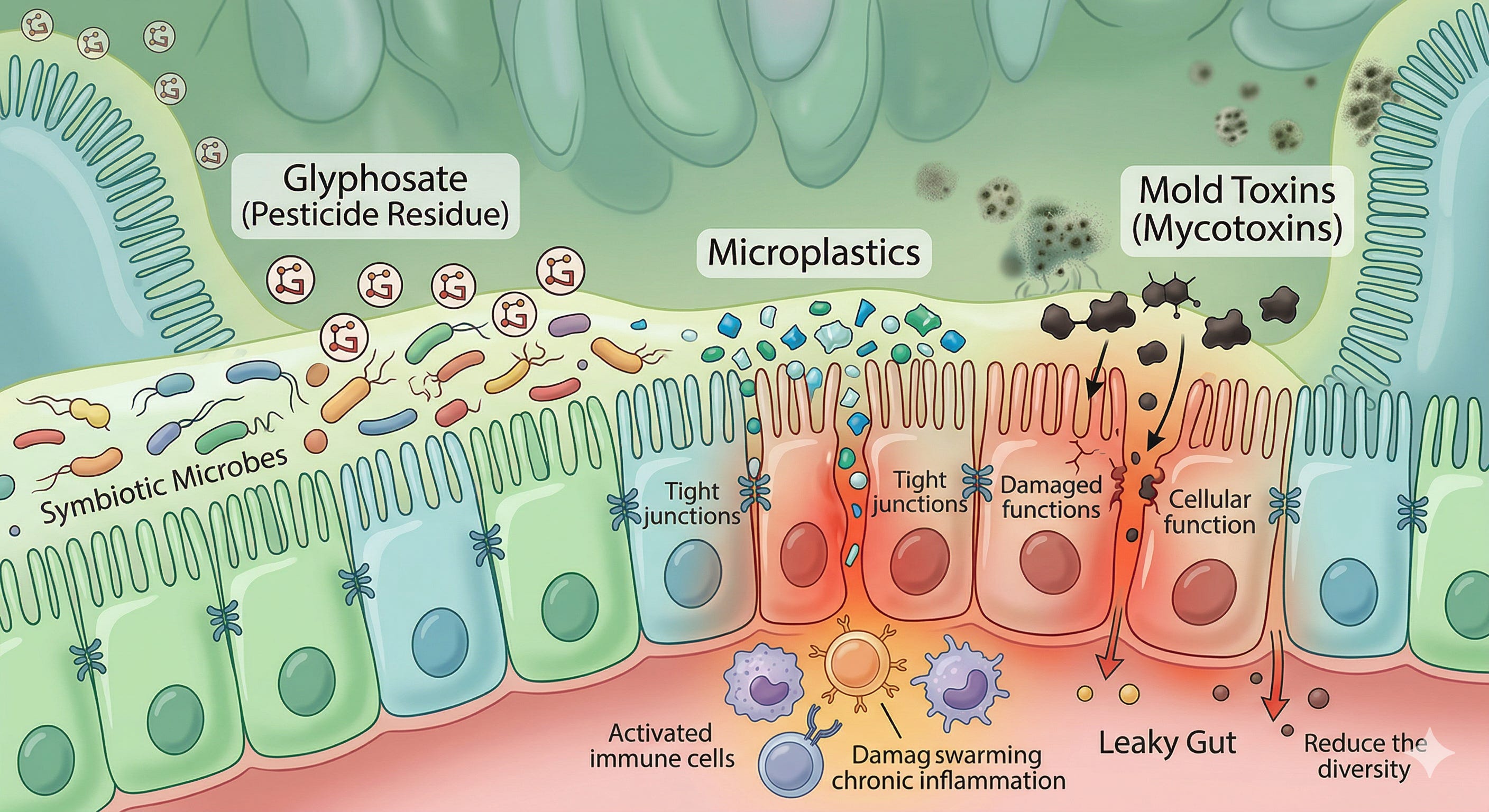
There are countless toxins and toxicants that can disrupt the gut microbiome, including microplastics, glyphosate, pesticides, mycotoxins, and heavy metals. While you won’t be able to completely avoid these, you can take steps to reduce your exposure.
We also know that certain medications, such as antibiotics, can disrupt the gut microbiome. While there is a time and place for these medications, it’s wise to avoid unnecessary use. Research also suggests that antithyroid medications (methimazole and PTU) can impact the gut microbiome. That said, everything comes down to weighing risks versus benefits, and while natural options such as bugleweed exist, there is still a time and place for medication.
3. Take probiotic supplements daily

This is a bit controversial, as some practitioners believe probiotics aren’t necessary. However, one of the main reasons I take them regularly is because of our constant exposure to gut-disrupting chemicals and other stressors.
Even if you eat a healthy diet, it can be difficult to consistently maintain optimal microbial diversity. Supplementing with probiotics can help support beneficial bacteria, especially during times of stress, travel, illness, or after taking medications that may disrupt the gut.
That said, not all probiotics are the same, and different people respond differently. Some individuals may do better with specific strains or even soil-based organisms, while others might need to focus more on prebiotics and diet. So while I personally take probiotics daily (SMT-Probio), it’s important to find what works best for you.
4. Activate your parasympathetic nervous system
The impact of stress and trauma on the gut is often overlooked. I discussed this in Newsletter #5, where I talked about how mind-body medicine techniques can support gut health.
Practices such as meditation, deep breathing, and yoga can help activate the parasympathetic nervous system—the “rest and digest” state—which is essential for proper digestion and healing.
That said, some people need to go beyond basic mind-body practices. This may include vagus nerve exercises or, in some cases, nervous system retraining to help shift the body out of a chronic stress response.
Final Thoughts
If you’re looking to reverse the autoimmune component of Graves’ disease, or heal from a different hyperthyroid condition, you can’t ignore the health of your gut. While diet and lifestyle are great starting points, many people need to go deeper by addressing gut infections, improving digestion, and supporting the nervous system.
The good news is that even small, consistent steps to improve gut health can have a significant impact over time. And in many cases, this ends up being one of the most important pieces of the healing puzzle.
P.S. Thank you for subscribing to Healing Graves’ Naturally! If you know anyone who has hyperthyroidism who is looking to save their thyroid, please share this with them right away.
Ready to Heal Your Hyperthyroidism?
If you have Graves’ disease or a different type of hyperthyroidism and are looking to save your thyroid and regain your health, here are some other resources you might find helpful:
1. Save My Thyroid Podcast. While most of the guest interviews can benefit those with hyperthyroidism AND Hashimoto’s, there are many solo episodes that focus on hyperthyroidism. Most of the podcasts are uploaded to my YouTube channel.
—> https://savemythyroid.com/podcast-2/
—> http://www.savemythyroid.com/YouTube
2. Hyperthyroid Books. I have three thyroid-related books, two of them which focus on hyperthyroidism. Natural Treatment Solutions for Hyperthyroidism and Graves’ disease is in it’s third edition, and my latest book is The Hyperthyroid Healing Diet.
—> https://savemythyroid.com/book/
3. Healing Graves’ Naturally Skool Community. When you join you get access to my Graves’ Survival Roadmap Training, and there is also a free monthly Hyperthyroid Healing Diet Q & A call with one of my nutritional health coaches.
—> https://www.savemythyroid.com/healgravesdisease
4. Hyperthyroid Healing Strategy Call. This is for those who are ready to time, energy, and finances to work with me one-on-one in my Hyperthyroid Health Restoration and Optimal Health program. I’ve been working with hyperthyroid patients since 2009, and personally dealt with Graves’ disease and restored my own health.
—> http://www.savemythyroid.com/strategycall
This is such an important connection.
So often the focus is solely on the thyroid… without looking at what’s actually driving the immune response in the first place.
The gut piece is huge.
Because if the system is constantly being triggered—whether from infections, permeability, or other stressors—you can’t fully calm things down by only supporting the thyroid itself.
You have to look at the terrain.
Appreciate you bringing this back into the conversation 💛
Thank you for this!!